Product Description
Quick Details
- Classification:
-
Halide (Except Chloride)
- Type:
-
Barium Fluoride
- CAS No.:
-
7787-32-8
- Other Names:
-
Barium fluoride
- MF:
-
BaF2
- EINECS No.:
-
232-108-0
- Place of Origin:
-
China
- Grade Standard:
-
Agriculture Grade, Industrial Grade
- Purity:
-
98%MIN
- Appearance:
-
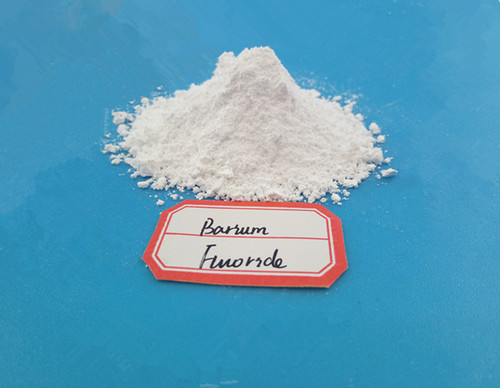
white crystal or powder
- Application:
-
Welding flux, optical glass
- Brand Name:
-
Fairsky
- Model Number:
-
BaF2
Superior Optical TransparencyBarium Fluoride offers excellent transparency from deep ultraviolet to mid-infrared regions (150 nm - 12 m), ideal for lenses, windows, and beam splitters in scientific instrumentation and laser systems. Its low absorption coefficient ensures minimal signal loss.
Industrial and Research ApplicationsBaF2 is widely utilized in fields such as infrared spectroscopy, scintillation radiation detection, metallurgy, and as a flux in glass and ceramics manufacturing. Its versatile utility stems from its technical, optical, and high-purity grades, meeting diverse industry requirements.
Safe Handling and StorageAlthough non-radioactive, Barium Fluoride is toxic if ingested or inhaled. Materials should be stored in tightly sealed containers and kept dry, away from acids and moisture. Proper safety measures and industry-standard packaging help ensure user safety and product integrity.
FAQ's of Barium Fluoride:
Q: What are the main industrial uses of Barium Fluoride?
A: Barium Fluoride is primarily used in the manufacture of optical components, such as windows and lenses for infrared and ultraviolet spectroscopy. It also serves as a scintillator in radiation detection, a flux in ceramics and glass production, and in metallurgical processes.
Q: How should Barium Fluoride be stored and handled safely?
A: It should be stored in tightly sealed containers, kept in a dry place, and away from acids and moisture. As Barium Fluoride is toxic if ingested or inhaled, handling should include protective clothing, eye protection, and adherence to proper safety protocols.
Q: What is the benefit of using Barium Fluoride in optical applications?
A: Barium Fluoride's wide transparency range (150 nm - 12 m) and low absorption coefficient make it highly desirable for optical applications, allowing efficient transmission of both ultraviolet and infrared light in scientific and industrial instruments.
Q: Where does the laser damage threshold of Barium Fluoride matter?
A: The laser damage threshold (~2 J/cm2 at 1064 nm, nanosecond pulses) is crucial when BaF2 is employed in high-energy laser systems, as it determines the maximum intensity the material can endure before degrading.
Q: What forms and packaging options are available for Barium Fluoride?
A: It is supplied as a powder or crystalline solid, typically packed in sealed containers such as 25 kg drums, or customized packaging based on client requirements to maintain product purity and safety during transport.
Q: Which solvents is Barium Fluoride soluble in, and when does this matter in processing?
A: Barium Fluoride is slightly soluble in water and soluble in hydrochloric and nitric acids, but insoluble in alcohol. This property is important during material purification, processing, or disposal to avoid unwanted reactions.





 triangulumchemical@gmail.com







 Send Inquiry
 Send Inquiry
 Send SMS
 Call Me Free